


Safety, reliability and a long service life are essential in the development of trains and other forms of public transport. Doors are used intensively every day and must reliably perform thousands of movements. Within the BIBUS Group, a compact and durable solution was therefore sought for an application in trains to safely decelerate pneumatically operated sliding doors.
Together with manufacturer Metal 99 and damping specialist ACE , a suitable solution using hydraulic shock absorbers was developed. Extensive testing was carried out to demonstrate that the selected shock absorbers were not only suitable for normal operation, but could also withstand exceptional loads.
Sliding doors for public transport
Metal 99 is a manufacturer specialising, among other things, in windows and door systems for public transport. The company produces electrically and pneumatically operated sliding doors and sliding plug doors for both interior and exterior applications.
The systems are developed based on the specific requirements of train manufacturers and other customers in the transport sector. Metal 99 has developed doors for trains and new InterCity carriages, among other applications.
For pneumatic systems and various technical components, Metal 99 has worked closely for many years with a local BIBUS organisation within the BIBUS Group.
Reliable damping of a 55 kg door
For a new sliding door system, there was a need for a compact hydraulic damping solution. The shock absorbers are integrated into the end positions of the pneumatically operated doors and ensure that the doors are decelerated in a controlled and reliable manner.
This may sound relatively straightforward, but the operating conditions place high demands on the components. Each sliding door has a mass of approximately 55 kg and can reach a maximum speed of 2 m/s.
The shock absorbers must safely absorb this kinetic energy. At the same time, they need to be compact enough to be integrated into the existing door design.
Another important practical risk in public transport also had to be considered: a passenger may open a door with excessive force or the door may otherwise be subjected to an unusually high load. Even in such situations, the door, drive system and profiles need to be protected as effectively as possible.
Selecting ACE shock absorbers
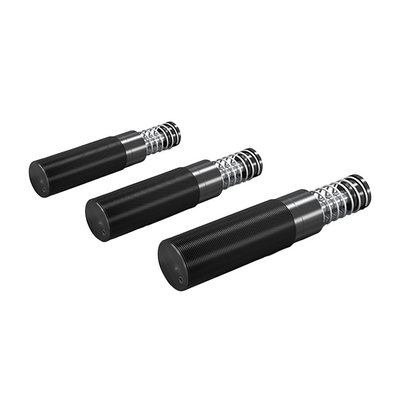
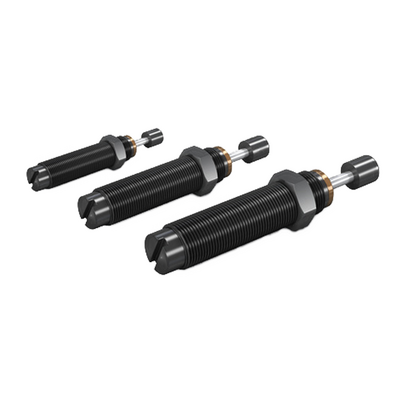
Within the BIBUS Group, ACE small hydraulic shock absorbers were considered for this application.
Following technical consultation, the ACE MC225EUMH was proposed. This compact shock absorber has an energy absorption capacity of 41 Nm per stroke. This was below the 59 Nm per stroke originally calculated for the application.
However, this did not automatically mean that the shock absorber was unsuitable. ACE incorporates generous safety tolerances into the development of its small and industrial shock absorbers.
To determine whether the MC225EUMH would provide sufficient capacity even under the most demanding conditions, it was decided to test the application under realistic conditions.
Drop test simulates a worst-case scenario
For validation, a special drop test was carried out at ACE in Langenfeld, Germany. The operating conditions of the application were reproduced as realistically as possible.
The test was based on a worst-case scenario in which the shock absorber had to absorb the full kinetic energy of a 55 kg door travelling at a maximum speed of 2 m/s.
During the test, the selected ACE shock absorbers were mounted on a force sensor. Their response to the exceptionally high load was then evaluated.
The results confirmed the suitability of the selected solution. The shock absorbers brought the mass to a controlled stop and withstood the overload without damage to critical components such as the seals, piston rod and guide.
This demonstrated that the compact shock absorbers can provide sufficient protection even under conditions that exceed those encountered during normal daily operation.
Additional protection for the door, profiles and drive system
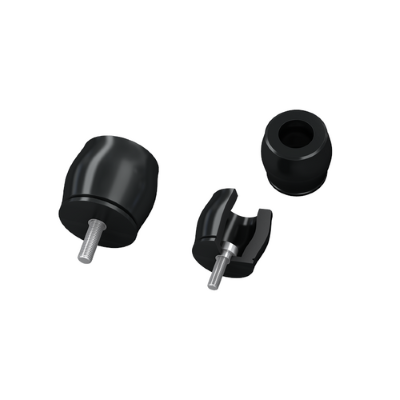
In addition to the hydraulic shock absorbers, the final design also incorporated rubber buffers manufactured by Metal 99.
This created a combination in which the ACE shock absorbers absorb the kinetic energy in a controlled manner, while the additional buffers provide extra protection for the end positions, door profiles and drive system.
The result is a robust sliding door system designed for long-term, intensive use in public transport.
Technical collaboration within the BIBUS Group
This application demonstrates how technical expertise within the BIBUS Group is used to develop suitable solutions together with customers and manufacturers. It is not simply a matter of supplying a component, but rather of evaluating the application, selecting the appropriate technology and validating the solution under realistic conditions.
Through the collaboration between Metal 99, BIBUS and ACE, a compact damping solution could be implemented that meets the demanding requirements placed on sliding doors in trains.
For BIBUS, this is also a strong example of how local expertise within the international BIBUS Group is combined with the specialist knowledge of experienced manufacturers.
ACE damping technology at BIBUS BV
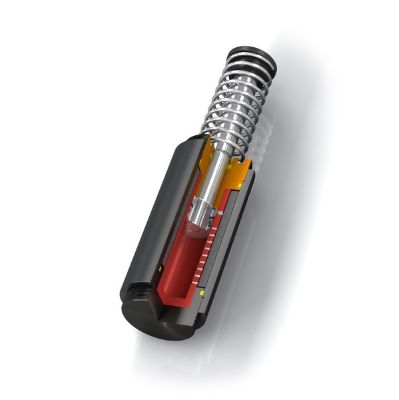
The range includes small shock absorbers, industrial shock absorbers, safety shock absorbers and other damping solutions. Selecting the right shock absorber depends on factors such as the moving mass, speed, energy per cycle, number of movements and available installation space.
Do you have an application in which a moving mass needs to be decelerated in a controlled manner? BIBUS BV will be happy to help you find the right damping solution for your application. Call +31 (0)252 433 733 or email [email protected].